
WordPress web development for business keeps winning because it balances flexibility, ownership and cost better than most alternatives. New builders and headless platforms come and go, yet WordPress remains the default choice for a large share of business sites. This guide explains why, the trade-offs, and how we build WordPress sites at Savoir Management.
Why does WordPress still reign in 2026?
WordPress is open source, extremely widely used and supported by a huge ecosystem of developers, themes and plugins. W3Techs reports it is used by 58.6% of websites with a known CMS, about 40% of all websites.

See W3Techs' WordPress usage statistics and its CMS market overview.
What is the state of web development in 2026?
Businesses expect fast, accessible, mobile-first sites that marketing teams can update daily. WordPress has adapted with the block editor, modern themes and performance improvements.

The WordPress block editor lets teams build pages with reusable blocks, and the Theme Handbook documents modern block themes.
What are the advantages of WordPress for business?
Ownership and portability, flexibility through themes and plugins, easy content editing, strong SEO control, a huge talent pool and lower long-term costs than many proprietary platforms.

Ownership: open-source software you can host and move anywhere
Flexibility: blogs, service sites, memberships and stores with WooCommerce
SEO: full control over URLs, titles, headings and structured data
Talent: easy to find developers and agencies
What are the trade-offs?
WordPress needs maintenance. Plugins and themes must be updated, hosting must be good and too many plugins slow sites and create security risk.
Follow WordPress's hardening guide and its hosting requirements: PHP 8.3 or greater, MySQL 8.0+ or MariaDB 10.11+ and HTTPS.
How does WordPress support long-term growth?
WordPress grows with you: new pages, languages, memberships, stores and integrations can be added without changing platforms, and content you publish keeps building search visibility.

Meet Core Web Vitals targets by choosing lightweight themes, limiting plugins and optimizing images.
When should you choose something other than WordPress?
Choose Shopify for a low-maintenance store, a site builder for a very simple short-term site, or a custom stack for complex web applications.
Compare options in Shopify vs WooCommerce, website builders vs developers and scalable web app development.
How does Savoir Management build WordPress sites?
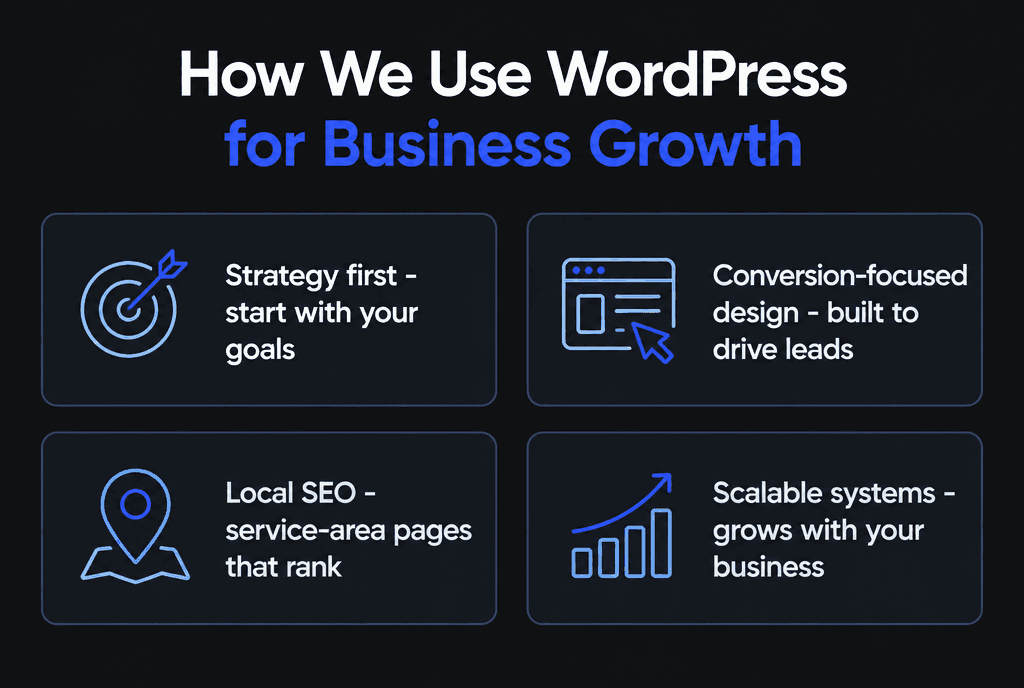
We build lightweight custom block themes, choose minimal, well-supported plugins, harden security, optimize speed and train your team to edit confidently, with maintenance plans to keep everything updated.
Our WordPress development team builds and maintains business sites. See also membership site development and blog websites for monetization.


