
Getting a website built in 7 days is realistic when the scope is clear and the process is disciplined. Speed fails when content is missing, decisions drag or the project quietly grows. This framework is how we run fast-turnaround projects at Savoir Management without sacrificing speed, accessibility or SEO.
Is a 7-day website realistic?
Yes, for focused websites of about 5 to 10 pages with ready content and quick approvals. Large catalogs, custom applications and complex integrations need more time.
What do you need before day 1?
Have your logo, brand colors, page copy or detailed notes, photos, service information, domain and hosting access and one decision-maker available. Missing content is the number one cause of delays.
What does the 7-day website development framework look like?
Day 1 strategy and sitemap, days 2 and 3 design, days 4 and 5 build and content, day 6 testing and fixes, day 7 launch and handover.
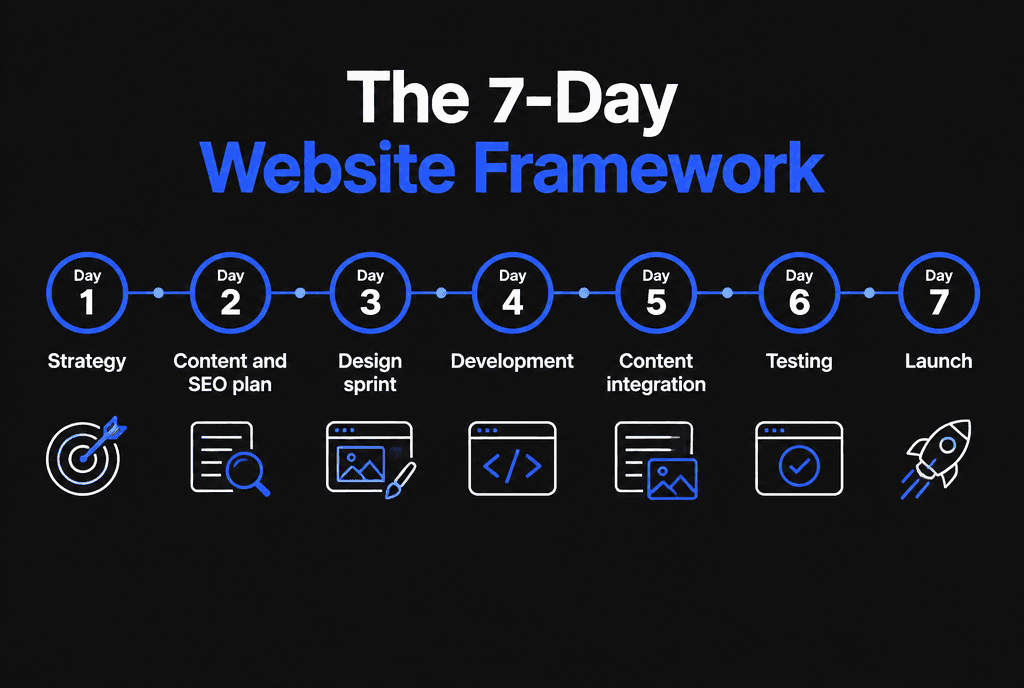
Day 1, strategy: goals, audience, sitemap and calls to action.
Days 2 and 3, design: homepage and key templates using proven layouts.
Days 4 and 5, build: develop pages, add content, set up forms and integrations.
Day 6, testing: mobile, speed, accessibility, forms, tracking and SEO basics.
Day 7, launch: go live, submit the sitemap and train your team.
What should be tested before a fast launch?
Test on real phones, check Core Web Vitals, confirm every form and tracking event, review accessibility basics and confirm titles, meta descriptions and the sitemap.
Accessibility basics from WCAG
Conversion events in Google Analytics
Sitemap submitted in Search Console, as described in Google's sitemap guide
Use our full website launch checklist.
What should you leave for phase two?
Defer extra pages, complex integrations, custom features and nice-to-have animations. Launch the core site, learn from real visitors, then build what the data supports.
What are the long-term benefits of fast-turnaround development?
You start generating leads weeks or months sooner, test messaging with real data and avoid projects that drag on and lose momentum.

How does Savoir Management get it done?
We use a fixed scope, proven components, daily check-ins and a dedicated team, so decisions happen fast and quality checks are never skipped.

Our web development team offers fast-turnaround builds. Related guides: building an e-commerce site fast, landing page development and web development packages for startups.


