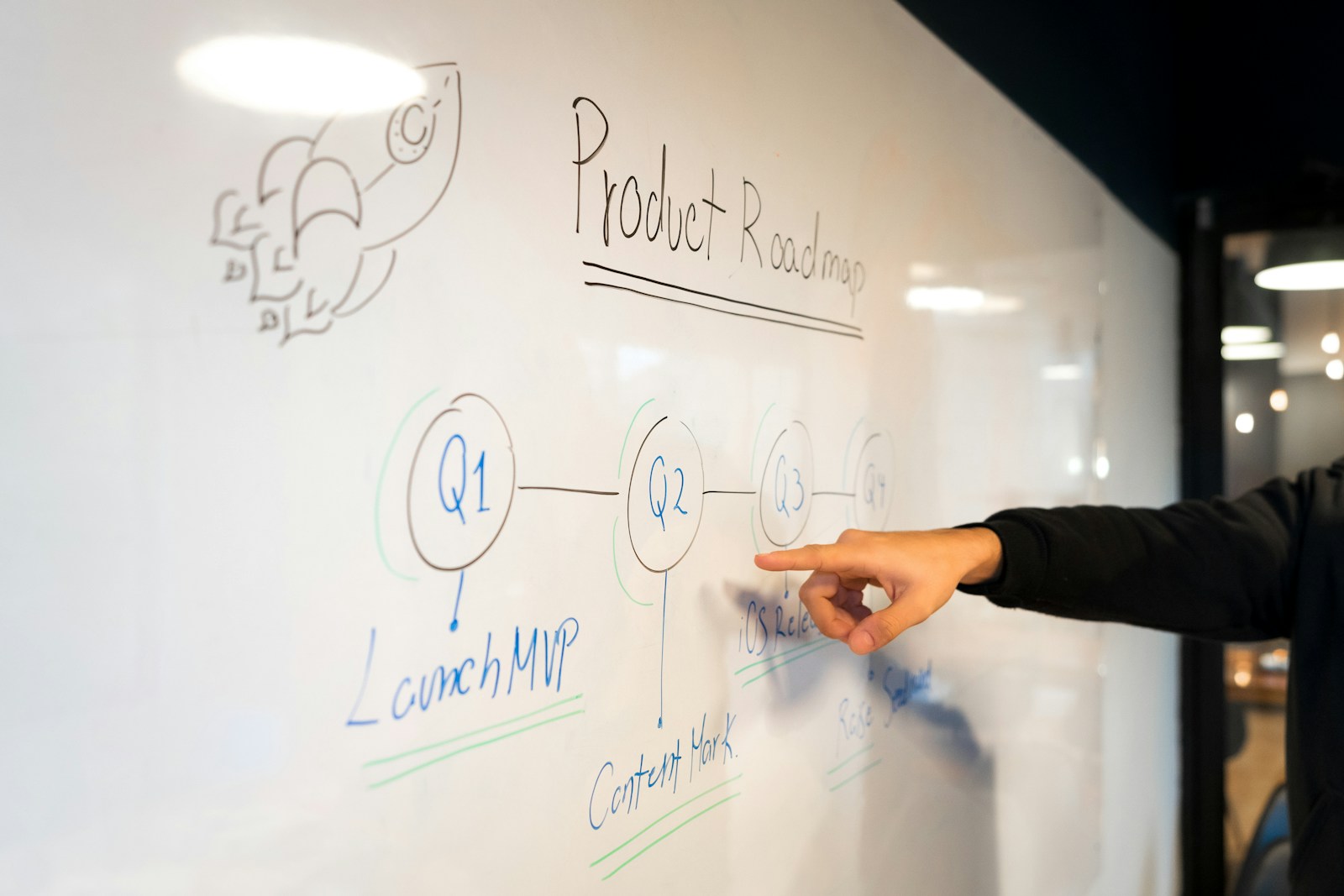
SaaS platform development is equal parts product, engineering and go-to-market. Many SaaS products fail not because the code is bad but because they solve a problem no one pays for, launch with too many features or lose users in the first session. This guide walks through the steps we follow when building SaaS products at Savoir Management.
Step 1: How do you define a SaaS vision and market fit?
Start with a specific problem for a specific customer, confirmed in interviews before you write code. If people cannot describe the cost of the problem and how they solve it today, the market may not pay for your solution.
Interview 15 to 30 target customers.
Document current workarounds and what they cost.
Pre-sell or run a waitlist to test willingness to pay.

Step 2: How do you map features and user experience?
Map the core workflow that delivers the outcome, then cut everything not needed to complete it. Prototype the flow and test it with real users before building.
Nielsen Norman Group's usability testing basics apply directly. Their research suggests testing with about five users per round uncovers most usability problems.

Step 3: What architecture should a SaaS platform use?
Use a managed cloud platform, a stateless application layer that can scale horizontally, a relational database for core data and proven services for authentication, billing, email and file storage. Design multi-tenant data separation from day one.
Frameworks such as AWS Well-Architected and the Twelve-Factor App methodology describe practices for reliability, security and scalability.
Step 4: How do you build security and compliance in?
Treat security as a feature: secure authentication, role-based permissions, encryption, logging, backups and dependency updates. B2B buyers often require a SOC 2 report, so plan controls early.
Build against the OWASP Top 10 risks. The AICPA explains SOC reports that many enterprise customers request.
Step 5: How should SaaS billing work?
Use a proven subscription billing service for plans, trials, upgrades, proration, invoices, taxes and failed-payment recovery. Custom billing code is a common source of bugs and revenue loss.
See Stripe's guide to how subscriptions work and our article on recurring revenue platforms.
Step 6: How do you develop the product strategically?
Ship in small increments, instrument every key action, and let usage data decide what to build next. A short, regular release cycle beats a long, risky one.
Track activation events, such as the first project created or first report shared.
Use feature flags to release safely.
Keep a public changelog to show momentum.

Step 7: How do you launch with a strategic promotion plan?
Launch with search-optimized landing pages, educational content, targeted paid search, partnerships and a clear trial or demo path. Pre-launch waitlists and early customer stories make launch week far stronger.
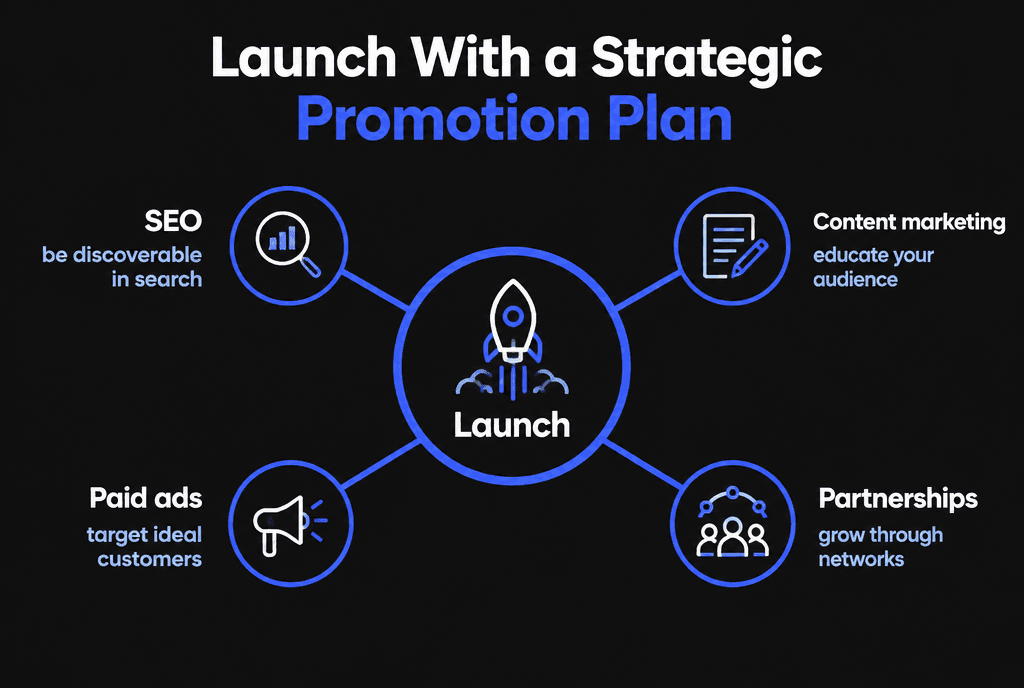
SEO: pages for each use case, integration and comparison.
Content: guides that solve your buyers' adjacent problems.
Paid ads: high-intent keywords. See how to launch a profitable Google Ads campaign.
Partnerships: integrations and co-marketing with complementary tools.
How do you scale a SaaS platform after launch?
Scale what drives retention: onboarding, the core workflow and integrations. Monitor performance and costs as usage grows, and invest in reliability before it becomes an emergency.
Track monthly recurring revenue, churn, activation rate and lifetime value in Google Analytics and your billing system. Our guide to scalable web app development covers the technical side.
How do you choose a SaaS development partner?
Choose a team that challenges scope, has shipped SaaS products, builds with security and billing best practices, and stays involved after launch.
Our custom web development team builds SaaS MVPs and platforms. For budgeting, see how much custom web development costs.