
Cost-effective web development is not the same as cheap web development. Many businesses overpay twice: once for features and overhead they do not need, and again when a bargain site fails to bring in business and has to be rebuilt. This guide explains what drives website cost and how we keep projects lean at Savoir Management without cutting what produces results.
Why do website prices vary so much?
Quotes vary because scope varies. The number of unique page templates, custom features, integrations, content creation, design depth and the provider's overhead all change the price, often without the buyer seeing the difference.
To compare quotes fairly, give every provider the same written scope: pages, features, integrations, content responsibilities and timeline. Skilled labor is the main cost: the U.S. Bureau of Labor Statistics lists 2025 median pay for web developers and digital designers at $99,520 a year ($47.85 an hour), so every unnecessary hour of custom work adds up quickly. See our web development pricing breakdown for typical ranges.
What is wrong with traditional web design pricing?
Traditional pricing often charges for hours or pages rather than outcomes. You can pay for elaborate custom design and agency overhead while basics that drive revenue, such as speed, conversion paths and tracking, are left out.
What do businesses really need from a website?
Most businesses need clear messaging, a few well-built page types, fast mobile performance, strong calls to action, basic SEO foundations, tracking and a CMS the team can update. That core covers most of the value.

Clear positioning and service pages
Conversion paths: forms, calls, booking or checkout
Core Web Vitals and mobile performance
SEO foundations from Google's SEO Starter Guide
Analytics and conversion tracking with Google Analytics
How does Savoir Management keep projects cost-effective?
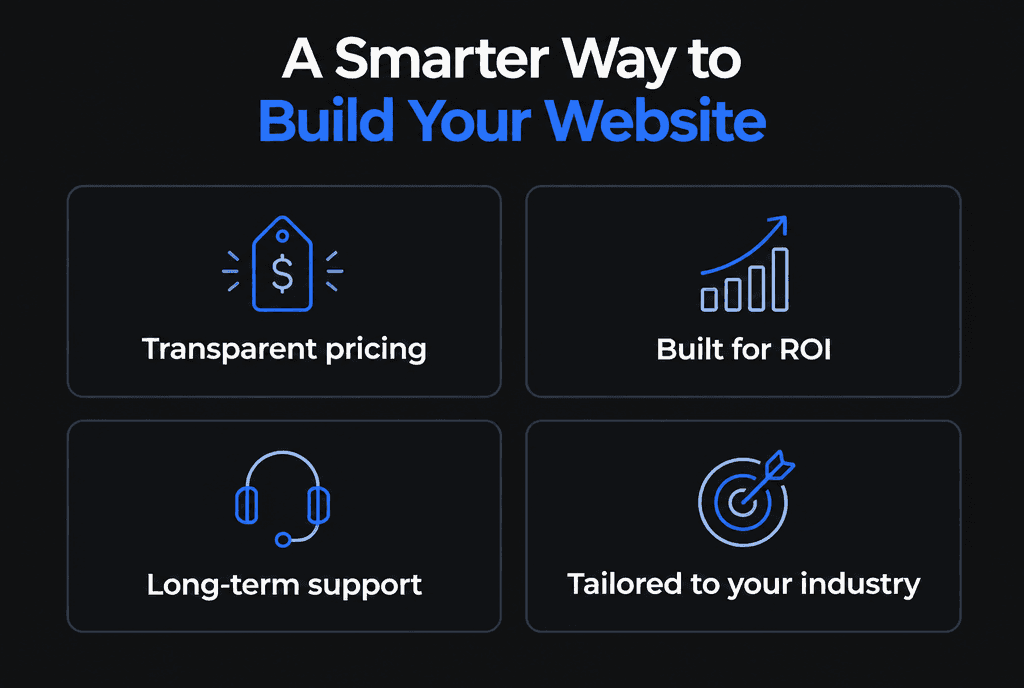
We start from goals, reuse proven components, build only the page templates you need, choose the platform that fits your team and include speed, SEO and tracking by default instead of selling them as extras.
Why isn't cheap always cost-effective?
Cheap builds often skip strategy, speed, accessibility, SEO and tracking. The site launches but produces few leads, and fixing it later costs more than doing it right once.

Hidden costs to watch for:
Paid plugins, apps and builder add-ons
Rebuilds every two or three years
Lost leads from slow or confusing pages
Accessibility fixes after a demand letter (see our ADA compliance guide)
Where should you invest, and where can you save?
Invest in messaging, conversion paths, speed and the pages that bring revenue. Save by using proven templates and components, limiting custom features to what differentiates you and phasing nice-to-haves after launch.
How do you maximize ROI on your website?
Track the leads or sales the site produces, improve the pages with the most traffic and fewest conversions, keep content fresh and maintain the site so it does not decay.

Compare options in our guides on DIY vs professional web development, website builders vs developers and affordable custom web development. Our web development team scopes projects around ROI.


