
Web development for service businesses has one job: turn local searches into booked jobs and signed clients. Plumbers, cleaners, clinics, contractors, accountants and agencies all sell trust and convenience, not products. This is the strategy we use for service businesses at Savoir Management.
Why do service businesses need a different web strategy?
Service buyers need to trust you, confirm you cover their area and contact you quickly. Your site must answer "Can they do it? Are they nearby? Can I trust them? How do I book?" on every key page.

What is the number one strategy for service-based businesses?
Build one focused page for each service and each main area you serve, each with clear benefits, proof and a strong call to action. Focused pages rank for specific searches and convert better than a single generic services page.
Service pages: what is included, process, starting price, FAQs
Area pages: local details, projects in that area, reviews from local customers
Calls to action: call, quote or book on every page
How do trust signals win service clients?
Show reviews, licenses, insurance, guarantees, certifications and real photos of your team and work near every call to action. Trust removes the biggest barrier to contacting a service provider.
How should booking and quotes work?
Offer click-to-call, a short quote form and online booking for fixed-scope services. Respond fast: quick response wins jobs from competitors.
Pew Research Center reports 91% of U.S. adults own a smartphone, so test every contact path on a phone. Our booking system website development guide covers scheduling features.
How does this strategy drive visibility and long-term growth?
Service and area pages compound over time: each one can rank, attract reviews and links and feed the Google Business Profile, building a steady flow of leads without paying for every click.

Google ranks local results on relevance, distance and prominence (local ranking tips). Add LocalBusiness structured data and read our local SEO web development guide.

How should service businesses measure results?
Track calls, quote requests and bookings as conversions by page and source, then expand the pages and channels that bring the best jobs.
Use Google Analytics recommended events and connect leads to your CRM or job management software.
What do real service businesses winning online have in common?
Clear service pages, many genuine reviews, fast mobile sites, quick responses and consistent local listings. None of it requires a huge budget, just a focused site and steady execution.

How does Savoir Management implement this strategy?
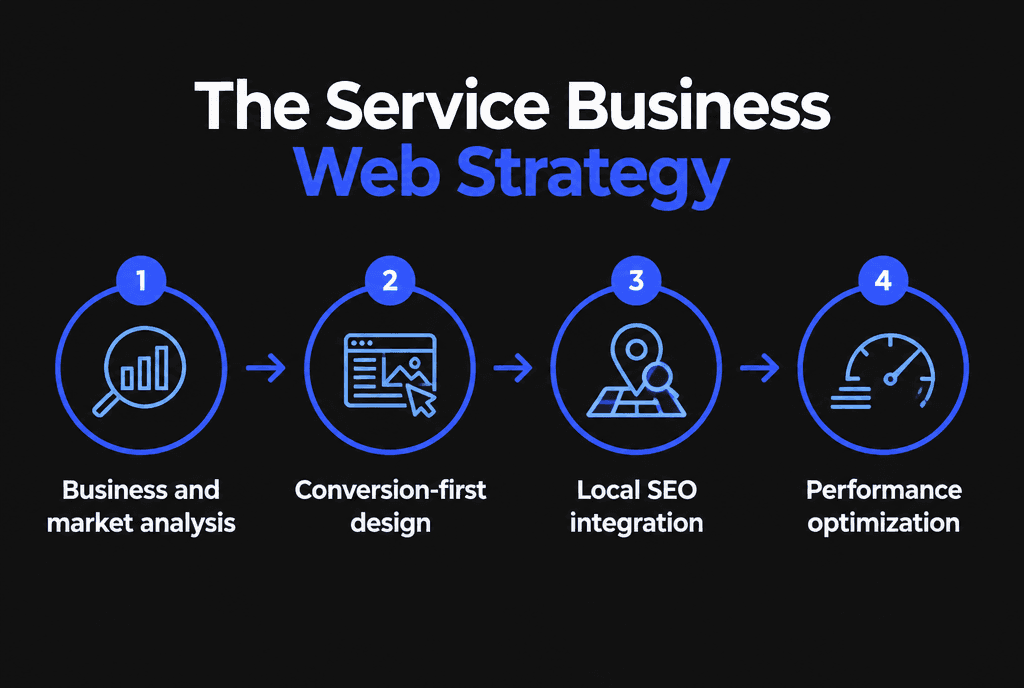
We map your services and areas, build focused pages with trust signals and easy contact paths, set up local SEO and tracking, and keep improving based on which pages produce jobs.
What is the winning move for service-based businesses?
Invest in a site built around services, locations, trust and fast contact, then keep adding reviews and content.

Our web development team builds service business websites. Related guides: why your website might be losing bookings, web development for lead generation and what local businesses must know before hiring a web developer.


