Web development for lead generation changes what a website is for. A brochure site describes your business and waits. A lead generation site is designed, written and built to start conversations with qualified buyers every day. This guide covers the elements and build decisions that make the difference, from the lead generation sites we develop at Savoir Management.
Why is your website the foundation of lead generation?
Buyers research online before contacting a business, so your website is the first impression, the sales pitch and often the only chance to capture interest. Every channel, from ads to referrals, sends people there to decide.
Visitors decide quickly. Nielsen Norman Group found users often leave pages within 10 to 20 seconds unless the value is clear.

What are the core elements of a lead-generating website?
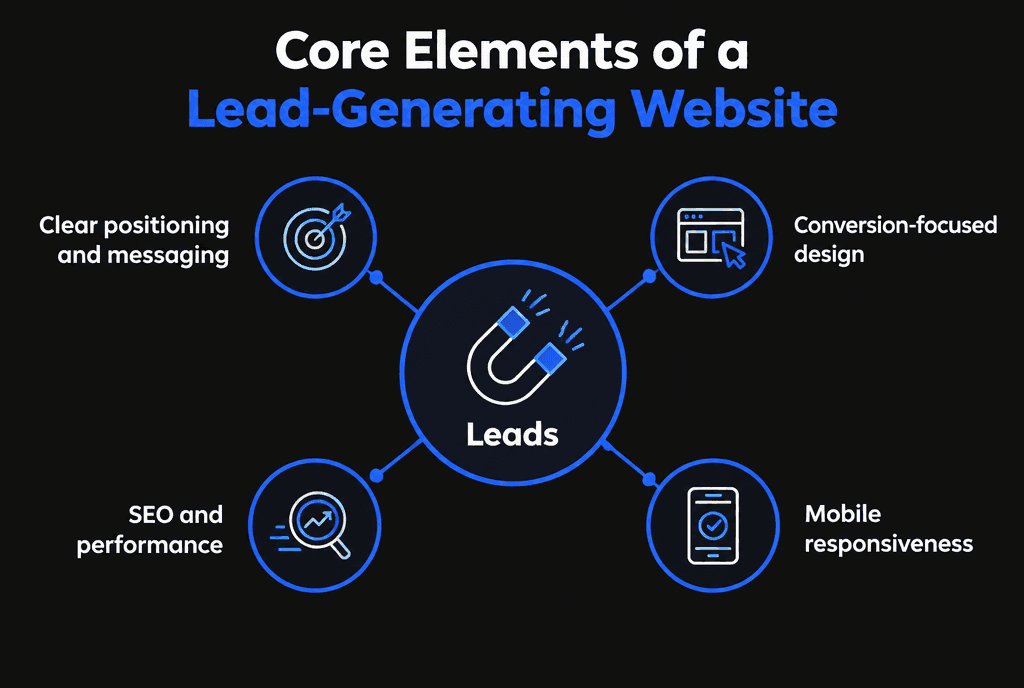
Clear positioning and messaging, conversion-focused design, SEO and performance, and mobile responsiveness are the core elements. Remove any one and lead flow drops.
What offers convert visitors into leads?
Offer two paths on key pages: a direct request for people ready to talk (consultation, quote or demo) and a lower-commitment resource for researchers (checklist, calculator or guide). Both build your pipeline.
Direct: "Get a free quote in 24 hours"
Diagnostic: "Get a free website audit"
Educational: "Download the pricing guide"
How should lead forms be designed?
Ask only for information you need to follow up, use clear labels, show helpful errors and explain what happens next. Long or confusing forms lose ready buyers.
Follow WCAG form basics: visible labels, keyboard support and accessible error messages. Add a sentence under the button such as "We reply within one business day."
Which mistakes stop websites from generating leads?
The common mistakes are treating the site like a passive brochure, hiding contact options, using vague headlines, slow mobile pages, missing proof and not tracking leads.

One generic "Contact us" page as the only path
No call to action on service pages or blog posts
Testimonials buried on a separate page
No idea which channel produced which lead
How do speed and mobile design affect lead flow?
Slow or awkward mobile pages lose visitors before they see your offer. Fast loading, click-to-call and thumb-friendly forms keep mobile leads flowing.
Meet the Core Web Vitals targets and design mobile-first: Pew Research Center reports 91% of U.S. adults own a smartphone.
How does SEO feed a lead generation website?
SEO brings buyers who search for your services and problems. Build a page for each service and use case, answer common questions in articles that link to those pages, and keep the site technically sound.
Follow Google's SEO Starter Guide, and read our guide to SEO-optimized web development.
How do you move from a static site to a strategic one?
Map every page to a buyer question and a next step, add offers and proof, connect forms to your CRM and track results. Then improve the pages with the most traffic and the fewest leads.

How do you measure lead generation performance?
Track form submissions, calls and bookings as conversions, pass source data to your CRM and measure qualified leads and revenue by channel and page.
Use Google Analytics recommended events such as generate_lead. Review monthly: conversion rate by page, lead quality by source and time to first response.
How do you build a website that generates leads?
Plan offers and pages around buyer questions, design for conversions and speed, integrate your CRM and keep testing.
Related guides: conversion-focused web development, high-converting landing pages and B2B web development. Our web development team builds lead generation sites, and our Google Ads team drives traffic to them.