
Real estate website development decides whether your marketing produces conversations or just page views. Buyers and sellers start their search online, compare agents quickly and expect fast, mobile-friendly property search. This guide covers the features we build into agent and team websites at Savoir Management to turn visitors into clients.
Why does web development matter more than ever for agents?
Buyers browse listings and research agents online before reaching out, so your website is where they decide whether to contact you. Portals and brokerage sites share attention with competitors; your own site builds your brand and captures leads you own.

The National Association of Realtors tracks how buyers and sellers use online tools in its Profile of Home Buyers and Sellers and Real Estate in a Digital Age reports.
What features does a high-converting real estate website need?
IDX property search, neighborhood pages, home valuation and saved-search lead capture, agent bios with reviews, fast mobile pages and CRM integration. Each feature gives visitors a reason to come back and a reason to contact you.
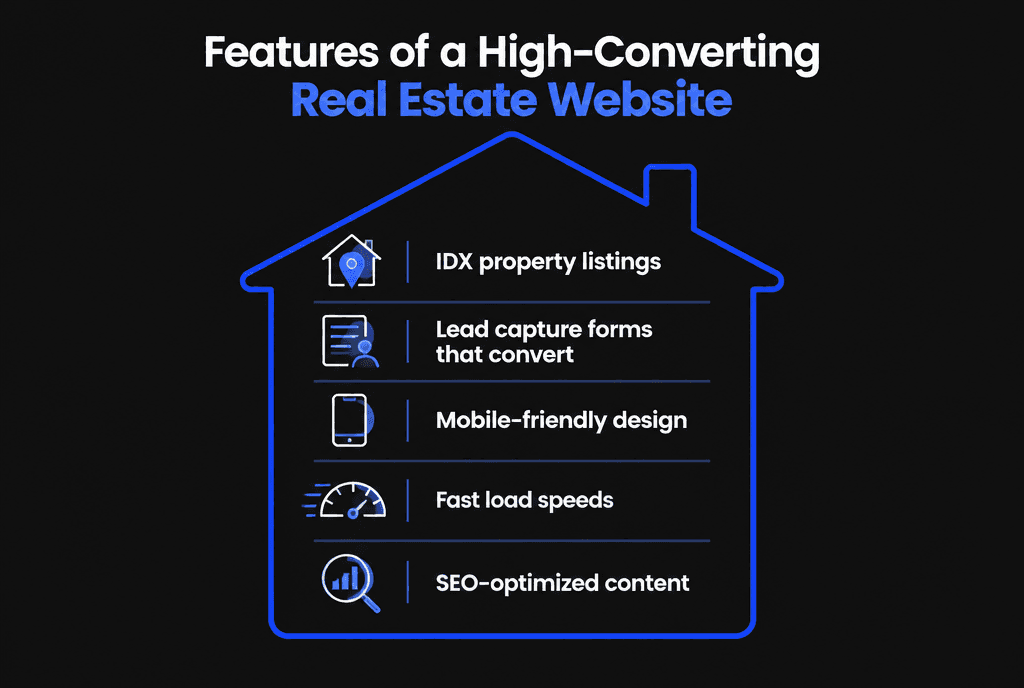
IDX search with filters, maps and saved searches
Neighborhood pages with schools, amenities, market data and listings
Seller tools: home valuation and market reports
Trust: bios, reviews, recent sales
Contact paths: showing requests, call and text buttons
How does web development help agents close more deals?
Fast follow-up wins deals. Connect every form to your CRM, send instant alerts and automated listing emails, and make it easy for leads to book showings and calls from any page.
Track leads with Google Analytics recommended events so you know which pages and sources produce clients. For booking features, see our guide to booking system website development.
How should agents approach local SEO?
Create detailed pages for each neighborhood and community you serve, keep your Google Business Profile complete, earn reviews and add structured data. Local pages help you rank for the areas where you want listings.
Google ranks local results on relevance, distance and prominence, according to its local ranking tips. Add LocalBusiness structured data and read our local SEO web development guide.
What role do analytics play in real estate web development?
Analytics show which neighborhoods, listings and lead magnets attract serious buyers and sellers, so you can invest in the pages and campaigns that produce closings.

What fair housing rules affect real estate websites?
The Fair Housing Act prohibits discrimination in housing, including advertising. Describe properties and amenities, not the type of person who should live there, and follow ad platform rules for housing categories.
Read HUD's Fair Housing Act overview. Ad platforms also restrict targeting for housing ads; our guide to Google Ads for real estate agents covers the details.
How do you keep listing pages fast?
Compress and resize property photos, lazy-load galleries below the fold and limit heavy scripts. Listing pages are image-heavy, so speed needs deliberate work.
Meet Core Web Vitals targets on mobile. Our site speed guide explains the fixes.
How does IDX integration work?
IDX lets licensed agents display MLS listings on their own websites through an approved feed or plugin. Listings update automatically, and visitors can search, save properties and request showings without leaving your site.
IDX rules are set by each MLS, so your provider must be approved for your market. Look for IDX solutions that load quickly, work well on mobile, let you create neighborhood and custom searches, and capture leads through saved searches and alerts. Some IDX setups display listings in frames that search engines cannot index well; options that create indexable listing pages may help SEO, depending on your MLS rules.
How should neighborhood pages be built?
Each neighborhood page should combine current listings with genuine local insight: schools, amenities, commute times, market trends, photos and your own experience selling there.
Generic paragraphs copied across neighborhoods add little value. Strong pages include:
An overview written from first-hand knowledge
Current listings filtered to the area
Recent market data, such as typical prices and time on market
Photos of streets, parks and local businesses
A call to action for buyers and sellers in that neighborhood
These pages help agents rank for local searches and give visitors a reason to stay.
How do home valuation tools generate seller leads?
A home valuation tool invites homeowners to enter their address in exchange for an estimated value or a personalized report, capturing contact details from people considering selling.
Automated estimates are a starting point, not a final price. The best follow-up is a personal market analysis prepared by the agent. Make it clear what the homeowner receives, respond quickly and explain how a professional valuation differs from an automated estimate.
How should real estate websites handle video and virtual tours?
Video tours, 3D walkthroughs and neighborhood videos keep buyers engaged and help sellers see your marketing quality. Embed them efficiently so they do not slow pages.
Use preview images that load the player only when clicked, host videos on platforms built for streaming and include captions. A short agent introduction video on the homepage and about page helps visitors feel they know you before calling.
How do you keep a real estate website accurate?
Keep listings synced through IDX, update sold properties and testimonials regularly, refresh market data monthly and remove outdated promotions. Accuracy builds trust in a market where information changes daily.
Assign someone to review key pages each month. Outdated market statistics or sold listings shown as available frustrate buyers and damage credibility.
How should teams and brokerages structure their websites?
Teams need individual agent profiles, a clear team value proposition, lead routing to the right agent and shared listings. Brokerages need office pages, agent directories and recruiting content as well as consumer pages.
Make each agent's profile useful: specialties, areas served, reviews and listings. Route leads automatically based on area, property type or availability, and track which agents and pages produce closings.
How do you comply with advertising and fair housing rules?
Follow fair housing law in all content, include required brokerage and license information, use accurate listing data and follow your MLS and state rules for advertising.
HUD's Fair Housing Act overview explains protected characteristics. Describe properties and amenities rather than ideal buyers, and review content and ads regularly. This is general information, not legal advice.
How do you measure real estate website performance?
Track registrations, saved searches, showing requests, valuation requests and calls as conversions, connect them to closed transactions in your CRM and review which areas and pages produce clients.
Use Google Analytics recommended events for key actions and record the source of each lead. Over time, the data shows which neighborhoods, content and campaigns justify more investment.
How should agents use content to attract sellers?
Publish content homeowners search for before listing: how to prepare a home for sale, local pricing trends, the selling process and costs, and stories of recent sales. Seller content builds trust long before someone is ready to sign.
Seller-focused articles and market updates give homeowners a reason to visit your site and subscribe to updates. Pair each article with a clear call to action for a pricing consultation or home valuation. Over time, this content helps agents rank for seller searches and keeps them top of mind with homeowners who plan to move in the coming months. Our guide to Google Ads for real estate agents explains how paid search can support the same seller strategy.
How do you stop losing deals to weak websites?
Replace a template with a site built around search, neighborhoods, lead capture and follow-up, then measure results monthly.

Our web development team builds real estate websites. To drive more buyers and sellers to it, read Google Ads for real estate agents.


