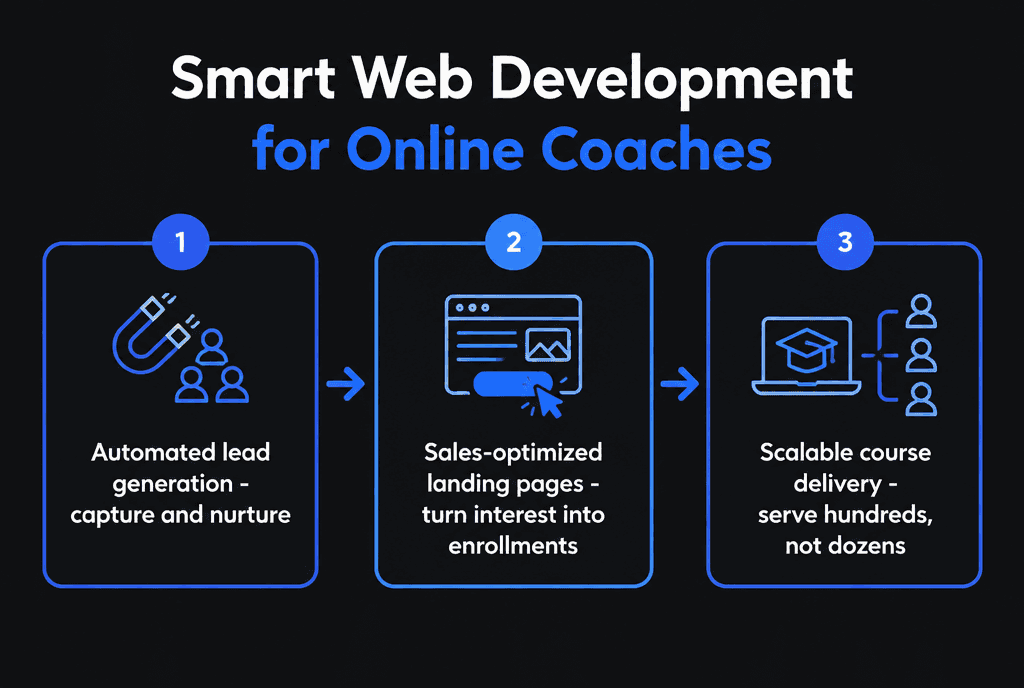
Web development for online coaches is about building a system, not just a homepage. Your website should attract the right people, prove you can help them, book calls without back-and-forth and, for course creators, sell and deliver programs while you sleep. Here is how we plan coaching sites at Savoir Management.
What does a coach's website need to do?
It needs to attract ideal clients, build trust quickly, capture leads, book discovery calls and sell programs. Every page should move a visitor one step along that path.
How do you position yourself on your website?
Lead with who you help and the transformation you deliver, such as "I help new managers lead confident teams in 90 days." Titles like "Certified Life Coach" describe you; outcomes attract clients.
Headline: audience + outcome
Subheadline: how you do it
Primary call to action: book a call or get the free resource
How does web development build authority and trust?
Authority comes from proof: client stories with results, credentials, media mentions, a professional design and useful free content. These answer the silent question "Can this person help me?"

Case studies or testimonials with specific results
An about page with your story, method and credentials
Consistent branding and a fast, polished site
Google's guidance on helpful, people-first content emphasizes first-hand experience and expertise, the same qualities clients look for. A dedicated about page can use ProfilePage structured data.
How should coaches capture and nurture leads?
Offer one focused lead magnet that solves a small piece of your client's problem, deliver it instantly by email and follow up with a short email sequence that leads to a discovery call.
Good lead magnets: a self-assessment quiz, a checklist, a short video course or a template. Track sign-ups as conversions in Google Analytics.
How do booking and payments fit into a coaching site?
Let prospects book discovery calls from every key page with real-time availability, and sell programs with secure checkout, payment plans or subscriptions. Fewer steps mean more calls and sales.
For memberships and payment plans, use a proven billing system such as Stripe subscriptions. Our guide to booking system website development covers scheduling features.
How should courses be delivered?
Deliver courses through a platform or members area with reliable video, progress tracking, mobile access and simple login. The delivery experience affects completion, results and referrals.
Add captions to videos; captions are part of WCAG accessibility guidance and help people who watch without sound. Read our guide to membership site development for members-area features.
How do coaches get found in search?
Publish content that answers your clients' specific questions, use clear page titles and headings, add video with descriptive titles and keep pages fast and mobile-friendly.

Follow Google's video SEO best practices and SEO Starter Guide. Target problem-focused phrases such as "how to handle a difficult employee as a new manager."
What is the ROI of smart web development for coaches?
A site that books calls and sells programs automatically lets you serve more clients without more hours. Track cost per lead, call-to-client rate and program revenue to see the return.
How do you get a coaching website built?
Define your audience, offer and lead magnet, choose booking, payment and course tools, then build a fast site around that funnel. Launch focused and add content over time.
Our web development team builds coaching and course sites. Consultants should also read why every consultant needs a website that sells, and see recurring revenue platforms for subscription models.