
B2B web development has a different job from consumer e-commerce. Few visitors buy on the first visit, several people influence the decision, and the website must keep convincing them for weeks or months. This guide covers what a B2B site needs to turn that long journey into pipeline, based on the B2B sites we build at Savoir Management.
How is a B2B website different from a B2C website?
A B2B site serves buying committees with long sales cycles. It needs detailed, role-specific content, strong proof, multiple conversion paths and integration with sales systems, rather than a quick checkout.
Technical evaluators want specifications and security details, finance wants cost and ROI, and executives want outcomes and risk. Plan pages and sections for each.
What features must every B2B website have?
Clear positioning, problem- and industry-specific solution pages, case studies and testimonials, lead capture for different readiness levels and integration with your CRM and marketing tools.
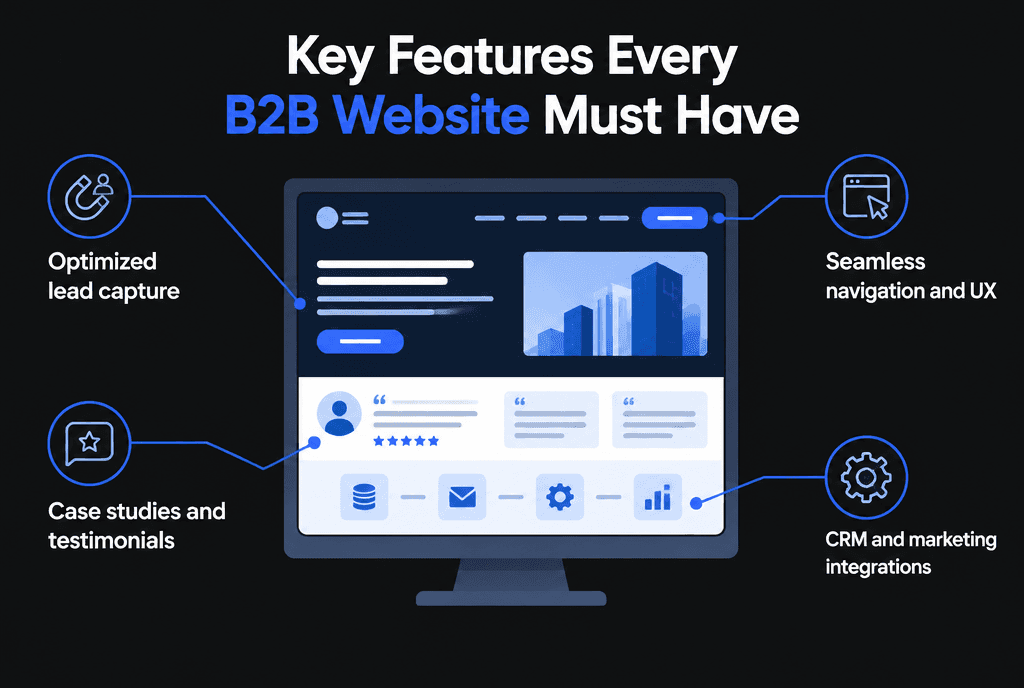
Positioning: say who you serve and the result you deliver in one sentence.
Solution pages: organized by problem, industry or role.
Proof: case studies with numbers, client logos, certifications.
Conversion paths: demo, consultation, pricing request, guides.
Integrations: CRM, marketing automation, scheduling and chat.
Which technical foundations drive long-term performance?
Fast, secure, crawlable pages with clean structure and structured data, on a platform your marketing team can update without developers. Technical debt slows every future campaign.
Meet Core Web Vitals targets.
Protect forms, logins and integrations against the OWASP Top 10.
Add Organization structured data for company details.
Follow Google's SEO Starter Guide for structure and links.

What content wins B2B buyers?
Content that answers real buying questions wins: problem explainers, comparisons, implementation details, pricing factors, security and compliance information, and case studies by industry.
Map content to stages:
Problem aware: guides that explain the problem and its cost.
Solution aware: comparisons and approach explainers.
Vendor evaluation: case studies, pricing, security and integration pages.
Follow Google's guidance on helpful, people-first content.
How should B2B lead capture work?
Give buyers a choice of next step based on readiness, keep forms short, route leads instantly to the right person and pass source data to the CRM.
Demo or consultation request with scheduling
Gated or ungated guides, calculators and webinars
"Contact sales" with a short qualifying form
Fast response: speed to lead matters in B2B
Read our guide on turning your website into a lead generation machine.
How do you optimize conversions and analytics for B2B?
Track micro and macro conversions, connect them to CRM opportunities and analyze which content and channels create pipeline. Optimize for qualified opportunities, not form fills.

Set up Google Analytics events for demo requests, content downloads and pricing views, and pass UTM data into the CRM.
Should B2B websites show pricing?
Show pricing or ranges when you can. Transparent pricing pre-qualifies buyers and builds trust; if pricing is custom, explain the factors and typical engagement sizes instead of hiding it entirely.
How does advertising fit with a B2B website?
Paid search and LinkedIn-style targeting bring decision-makers to specific landing pages, and the website must continue the conversation. Microsoft Advertising, for example, offers LinkedIn profile targeting for search ads.
Microsoft documents the feature in its audience targeting tools.
See our comparison of Bing Ads vs Google Ads and our guide to landing pages.
How do you choose a B2B web development partner?
Choose a partner who understands B2B sales cycles, plans content around buying stages, integrates with your CRM and measures pipeline, not just traffic.
Our custom web development team builds B2B websites, and our guides on consultant websites and agency websites cover related models.