
Law firm website development has higher stakes than most industries. Prospective clients often face stressful legal problems, compare several firms quickly and judge credibility from the website before calling. At the same time, lawyers must follow advertising and ethics rules. This guide covers what we build into law firm websites at Savoir Management. It is general information, not legal advice.
Why is your website the new first impression?
Most prospective clients research online before contacting a lawyer, even when referred. Your website is where they decide whether your firm understands their problem and seems trustworthy enough to call.
For local services, Google ranks results on relevance, distance and prominence, according to its local ranking tips. A strong website supports all three.
What core elements must every law firm website have?
Practice area pages, attorney bios, a clear consultation path, office information, FAQs, required disclaimers and fast, accessible, secure pages. Each one answers a question clients ask before choosing a firm.
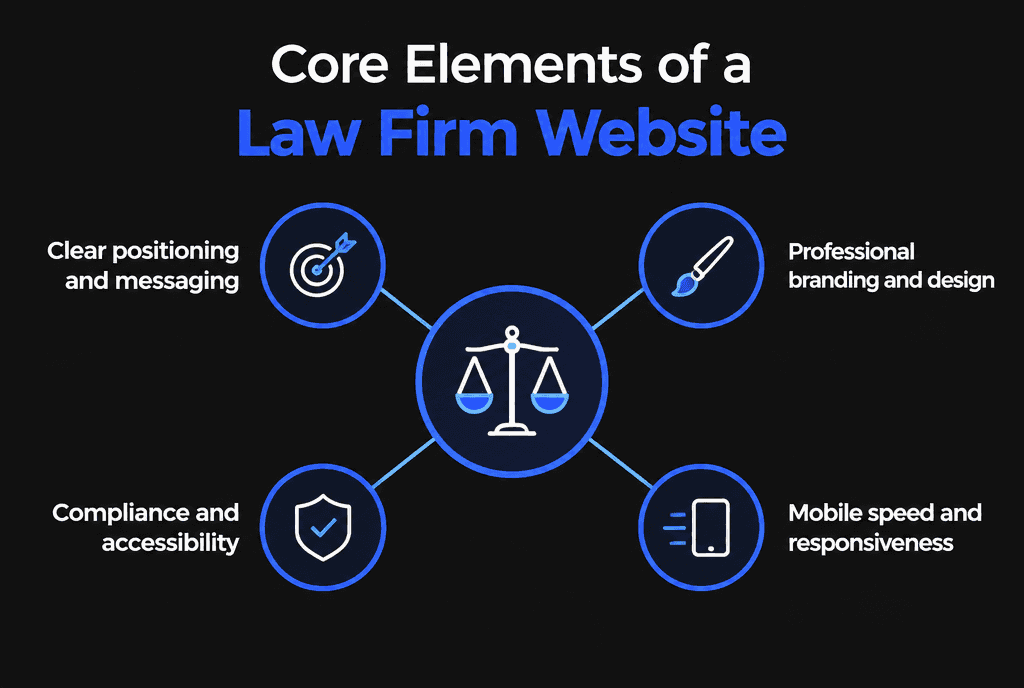
Practice area pages: one per service, explaining the process, timelines and common questions.
Attorney bios: education, bar admissions, experience and a professional photo.
Intake: phone, form and scheduling options, with a response-time promise.
Locations: address, hours and map for each office.
What advertising rules apply to law firm websites?
State attorney advertising rules apply to websites. Most are based on the ABA Model Rules, which prohibit false or misleading communications and regulate solicitation and specialization claims.
Review ABA Model Rule 7.1 and Rule 7.2, then check your state bar's version. Pay attention to case results, testimonials, "specialist" language and required disclaimers.
What mistakes do law firms make with their websites?
Generic pages that list practice areas without explanation, no clear way to book a consultation, slow mobile pages, outdated design, missing bios and claims that may conflict with advertising rules.
One "Practice Areas" page instead of a page per service
Contact forms that promise nothing about response time
Stock photos instead of real attorneys and offices
Missing disclaimers about attorney-client relationships
How do you turn a law firm website into a client-generating machine?
Answer real client questions on each practice page, make consultation booking easy on every page, show credibility through bios and permitted reviews, and track which pages and sources produce consultations.

Track calls and form submissions as conversions with Google Analytics recommended events.
How should law firms approach local SEO?
Build practice and location pages, keep your Google Business Profile complete and active, earn reviews, list the firm consistently across directories and add structured data for your offices.
Use LocalBusiness structured data for each office, and follow Google's SEO Starter Guide. Our local SEO web development guide goes deeper.
How should law firms handle security and accessibility?
Serve every page over HTTPS, keep intake forms minimal and secure, and build to WCAG so every potential client can use the site. Legal websites are frequent targets of accessibility demand letters.
Follow WCAG and the DOJ's web accessibility guidance. Read our guide to ADA-compliant web development.
How does strategic web development support long-term growth?
A well-structured site grows with the firm: new practice pages, new attorneys and new locations slot in cleanly, content builds authority over time and paid campaigns have strong landing pages to send traffic to.
Legal advertisers should also read our guide on how attorneys use Google Ads to land high-value clients.
How should practice area pages be written?
Write each practice area page for a person facing that legal problem: explain the issue in plain language, outline the process and timeline, answer common questions, describe how the firm helps and invite a consultation.
A strong practice area page often includes:
A plain-language overview of the legal issue
Situations the firm handles within that area
What the process looks like and typical timelines
What to bring to a first consultation
Answers to frequent questions, such as fees and outcomes, within advertising rules
Attorney bios for lawyers who handle the practice
A clear consultation call to action
Avoid copying the same text across practice areas or locations. Distinct, helpful pages serve clients better and perform better in search.
How should attorney bios be presented?
Each attorney bio should include education, bar admissions, practice areas, relevant experience, professional memberships, publications or speaking and a professional photo. Write in a human tone that helps clients feel comfortable reaching out.
Clients often choose a lawyer as much as a firm. Bios are among the most visited pages on law firm sites. Link each bio to the practice areas the attorney handles, and link practice pages back to their attorneys. ProfilePage structured data can help search engines understand individual bio pages.
How should law firms handle reviews and testimonials?
Collect reviews on your Google Business Profile and legal directories, display them where your state's rules allow, avoid misleading claims about results and include required disclaimers.
Rules on testimonials and case results vary by state. Many require disclaimers that past results do not guarantee future outcomes. Review the ABA Model Rules and your state bar's guidance before publishing case results or client quotes.
How should intake forms protect confidentiality?
Collect only basic information in initial forms, warn users not to share confidential details before a relationship exists, state that submitting the form does not create an attorney-client relationship and send data securely.
Forms should be served over HTTPS and stored or delivered through secure systems rather than plain email where possible. Route inquiries to intake staff quickly, and run conflict checks before discussing details.
How does content marketing help law firms?
Helpful articles that answer common legal questions build trust, attract search traffic and show expertise. Topics such as "what to do after a car accident" or "how custody is decided" match what prospective clients search for.
Write for laypeople, keep information accurate and current, include a clear disclaimer that content is general information and link each article to the relevant practice area page. Google's guidance on helpful content emphasizes expertise and trust, which legal content must demonstrate.
How should multi-office firms structure location pages?
Create a page for each office with its address, hours, phone number, attorneys, practice areas available and directions. Link each Google Business Profile to its matching location page.
Unique local details help clients and search engines. Add LocalBusiness structured data for each office, and keep details consistent across directories.
How do you measure a law firm website's performance?
Track calls, consultation requests and chats as conversions, connect them to signed cases in your intake or case management system and measure which practice areas and channels produce clients.
Use call tracking that respects confidentiality, set minimum call durations to filter misdials and review monthly which pages produce consultations. Firms advertising online should also read our guide to Google Ads for lawyers.
How often should a law firm website be updated?
Review practice pages and attorney bios at least yearly, update content when laws change, add new attorneys and results promptly and refresh design every few years.
Outdated information, such as attorneys who have left or laws that have changed, harms credibility and can raise ethics concerns. Assign someone to own website accuracy.
Why work with Savoir Management?
We build fast, accessible law firm websites around practice-area content, local SEO and consultation intake, and we design with advertising rules in mind.

Our web development team builds law firm sites, and our Google Ads team drives consultations to them.


