
Healthcare website development carries more responsibility than most industries. Patients use your site to understand symptoms and services, check credentials, confirm insurance and book care, often while worried. The site must also protect privacy and work for people with disabilities. This guide covers what we build into healthcare websites at Savoir Management. It is general information, not legal or compliance advice.
Why is healthcare going digital-first?
Patients now research providers, read reviews and book appointments online. Practices with clear, fast, easy-to-book websites win patients that slower, outdated sites lose.
Why do custom websites outperform templates in healthcare?
Custom healthcare sites are built around your specialties, patient journeys, scheduling and privacy needs. Templates often carry generic layouts, unused scripts and tracking that do not fit healthcare requirements.

What does an outdated healthcare website cost you?
Missed appointments, more phone calls, lower trust, weaker local rankings and compliance risk from old forms, plugins and tracking scripts.

How should healthcare websites handle privacy and HIPAA?
Collect protected health information only through secure, HIPAA-compliant tools with business associate agreements, keep public pages free of unnecessary tracking and review analytics and ad pixels with your compliance advisor.
HHS explains the HIPAA Security Rule and has published guidance on the use of online tracking technologies by HIPAA covered entities. Build forms and portals against the OWASP Top 10.
What are the key benefits of a custom healthcare website?
Easier booking, clearer service information, stronger trust, better accessibility and local visibility, and privacy controls designed for healthcare from the start.

Service and condition pages written for patients
Provider bios with credentials and specialties
Online scheduling or appointment requests
Insurance, location and hours information
Patient resources and FAQs reviewed by clinicians
Why does accessibility matter for healthcare sites?
Many patients have visual, hearing, motor or cognitive disabilities. Accessible design lets everyone find information and book care, and reduces ADA risk.
Follow WCAG and the DOJ's web accessibility guidance. See our ADA-compliant web development guide.
How do healthcare providers get found locally?
Build a page for each service and location, complete Google Business Profiles, earn patient reviews and add structured data for each practice.
Google ranks local results on relevance, distance and prominence (local ranking tips). Use LocalBusiness structured data and follow Google's guidance on helpful, people-first content.
How does Savoir Management help healthcare providers?
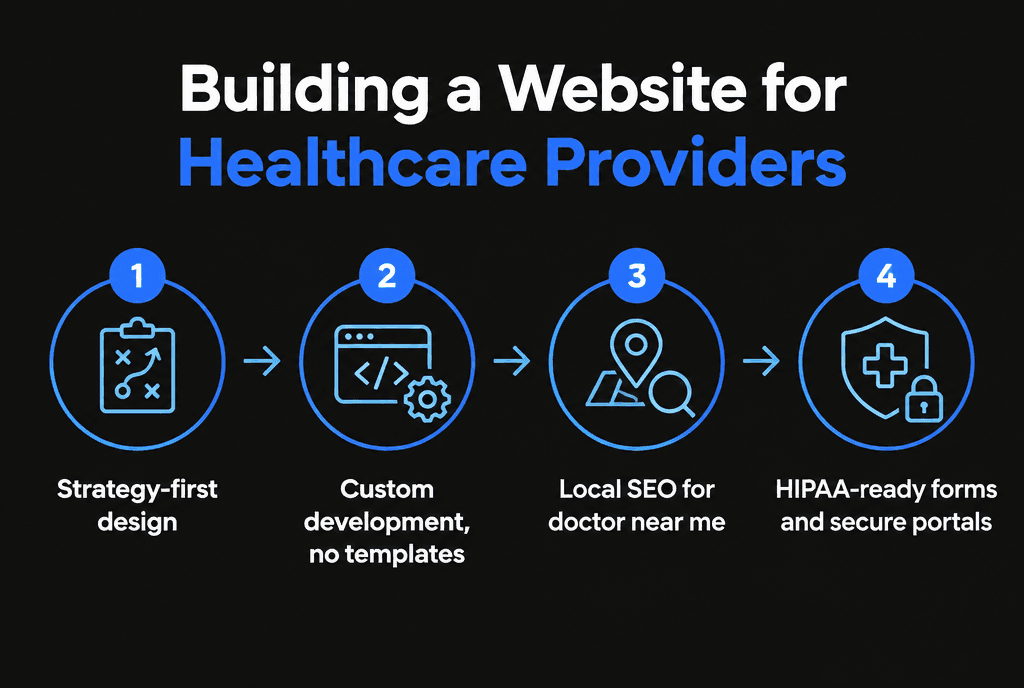
We build fast, accessible, privacy-aware healthcare websites with scheduling, service pages and local SEO, and we coordinate with your compliance team on forms and tracking.
Our web development team builds healthcare sites. Practices that rely on appointments should read our guides to booking system website development and why your website might be losing bookings.


