
A Meta ads retargeting strategy focuses spend on the people most likely to buy: those who already know you. Most visitors leave without converting, and Baymard Institute's research puts the average documented online cart abandonment rate at 70.22%. Retargeting on Facebook and Instagram is how you bring a share of them back. This is the step-by-step approach we use at Savoir Management.
What is Meta ads retargeting, and why does it work?
Meta retargeting shows ads to people who already interacted with your brand: website visitors, video viewers, Instagram engagers or past customers. It works because these people know you, so a reminder, an answer to an objection or a reason to act now often closes the sale.
Retargeting is not spamming people who did not buy. Done well, it reminds them why they almost did. Meta builds these groups through custom audiences from your website, app, engagement and customer lists.

Step 1: How do you set up tracking for Meta retargeting?
Install the Meta Pixel on every page, send standard events (ViewContent, AddToCart, InitiateCheckout, Purchase), and add the Conversions API so events also arrive from your server. Without clean events, your audiences and reporting fall apart.
The Meta Pixel tracks actions people take on your website.
The Conversions API sends the same events server-side, which improves matching and measurement.
Use event deduplication so the same purchase is not counted twice.
Step 2: How should you build retargeting audiences?
Segment audiences by intent and recency, not just "all visitors." Someone who abandoned a cart yesterday needs a different ad than someone who read a blog post three weeks ago.
A practical audience map:
Hot: added to cart or started checkout in the last 7 days
Warm: viewed product or pricing pages in the last 14 days
Engaged: watched 50% or more of a video, or engaged with your Instagram, in the last 30 days
Past buyers: purchased in the last 180 days, for cross-sell and repeat offers
Exclude each smaller, hotter audience from the broader ones so people only see the most relevant ad.

Step 3: What message should each audience see?
Match the ad to the hesitation. Cart abandoners usually need reassurance or urgency, product viewers need proof, and engaged non-visitors need a clear reason to click. Past buyers need something new.
Cart abandoners: shipping and returns policy, limited-time incentive, reviews of the exact product.
Product viewers: best sellers, comparisons, user-generated content.
Engagers: a short demo or founder story with a soft offer.
Past buyers: complementary products, refills, loyalty rewards.
Step 4: Which ad formats work best for retargeting?
Dynamic product ads from your catalog, short testimonial videos, carousels of viewed products and Stories or Reels ads work best. Dynamic ads automatically show people the items they viewed.
Keep ads familiar: same brand colors and product images people saw on your site, so the ad feels like a continuation of their visit rather than a new message.

Step 5: How do you control frequency and fatigue?
Watch frequency alongside click-through rate and cost per result. When frequency climbs while CTR falls, refresh creative, shorten the audience window or lower the budget. Seeing the same ad too often annoys people who were close to buying.
Rotate at least two or three creatives per audience and replace the weakest every couple of weeks. Meta's ad auction also factors in ad quality and estimated action rates, so fatigued ads cost more to deliver.
Step 6: How do you measure retargeting results?
Judge retargeting by return on ad spend, cost per acquisition, frequency and click-through rate, and test it against a holdout where possible. Retargeting can take credit for sales that would have happened anyway.
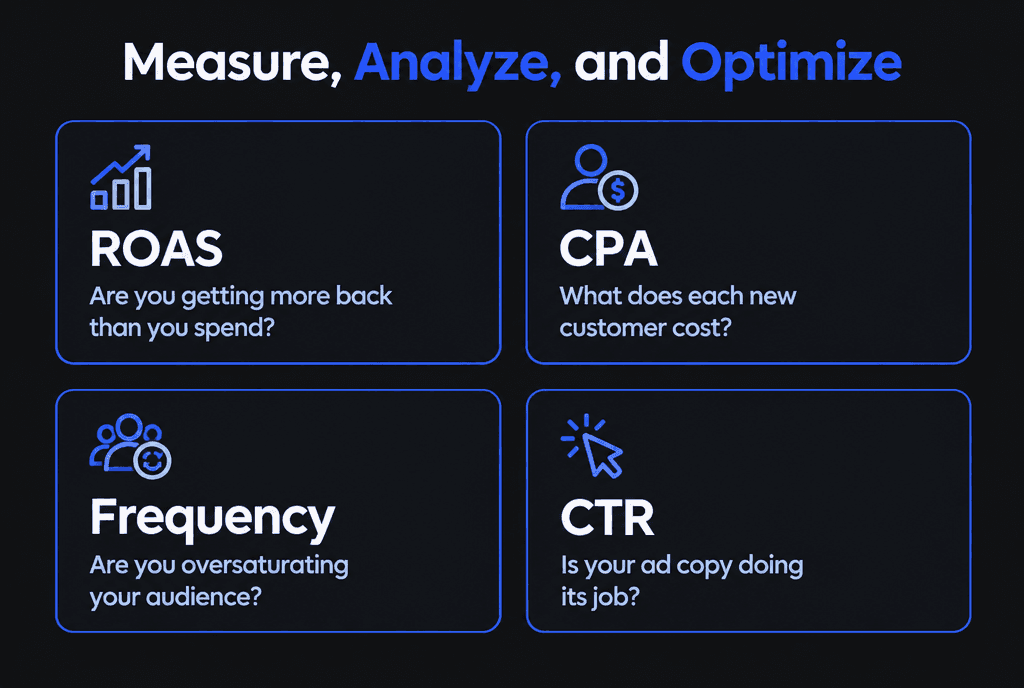
Use Meta's A/B testing tool to compare offers or creatives on the same audience. Confirm revenue in your store or analytics, not only in Ads Manager.
How do you scale retargeting without wasting money?
Retargeting is limited by the size of your warm audiences. To scale it, grow the top of the funnel with prospecting campaigns and look-alike audiences, then let retargeting convert the extra visitors.
Build look-alike audiences from purchasers to find new prospects similar to your buyers. Our Meta Ads e-commerce guide covers prospecting and campaign structure.
What retargeting mistakes should you avoid?
Avoid one giant "all visitors" audience, showing purchasers the product they just bought, discounting too early, ignoring frequency and judging results without a holdout or analytics check.
The website matters too. If checkout is slow or confusing, retargeting only brings people back to the same problem. Our guide to e-commerce websites that increase sales covers the fixes. Retargeting is about relationships, not ads, and our Facebook ads team can build the program for you. You can apply the same ideas on TikTok.