Directory website development can create a durable, revenue-generating asset, but only if the directory is useful enough to deserve traffic. Generic directories with thin listings rarely rank. Niche directories with complete data, good search and helpful category pages often do. Here is how we plan and build directories at Savoir Management.
How do you choose the right niche for a directory?
Choose a niche with real search demand, a clear audience and listings that are hard to find or compare elsewhere. "Pet-friendly vacation rentals in Florida" beats "travel directory" because it serves a specific need.
Check for:
Searches that include "near me," "best," "list of" or "directory" in your niche
Businesses willing to pay for visibility
Data you can gather and keep accurate
Weak competition from large platforms

What web development foundations make a directory successful?
Speed, scalability, SEO-friendly architecture and secure hosting are the foundations. A directory adds pages and data constantly, so it must stay fast and organized as it grows.
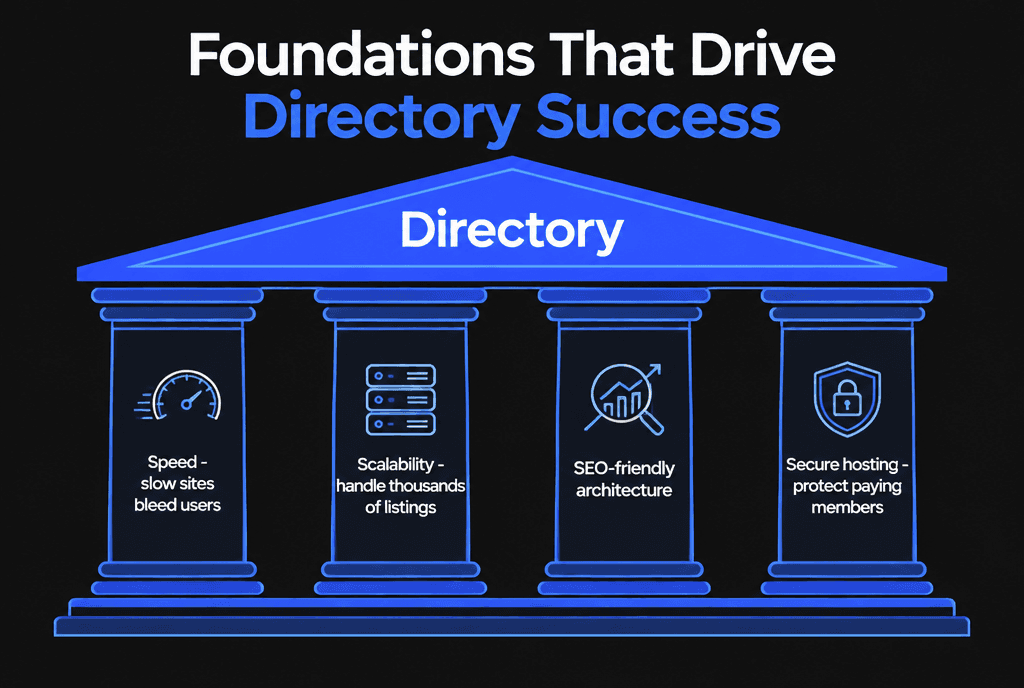
Data model: consistent fields for every listing so search and filters work.
Search and filters: fast, forgiving search with filters for category, location, price and ratings.
Speed: meet Core Web Vitals targets even on listing pages with maps and images.
Security: protect accounts, payments and admin areas against the OWASP Top 10 risks.
How do you make a directory rank in Google?
Create helpful category and location pages, give each listing unique and complete information, control which filter combinations get indexed, and link pages in a clear hierarchy. Thin, duplicated pages hurt the whole site.
Manage faceted navigation so filter URLs do not waste crawl budget.
Use canonical URLs to consolidate duplicates.
Add LocalBusiness structured data to listing pages where appropriate.
Avoid scaled, low-value pages; Google's spam policies target them.
For very large directories, read Google's guide to crawl budget.
What features do users expect from a directory?
Users expect fast search, useful filters, detailed listings with photos, hours and contact options, reviews, maps and mobile-friendly design. Listing owners expect a dashboard to update their profiles.
Claim-your-listing flow with verification
Owner dashboards for edits, photos and analytics
Reviews with moderation
Saved searches and favorites for users
Contact or booking buttons that track leads
How do directory websites make money?
Directories earn from featured or premium listings, subscription memberships, lead or booking fees, advertising and sponsorships. Most successful directories combine a free basic listing with paid upgrades.

Freemium listings: free basic profile, paid enhanced profile.
Memberships: monthly plans billed through a subscription platform such as Stripe Billing.
Pay per lead: charge for qualified inquiries or bookings.
Advertising and sponsorships: category or city sponsors once traffic is meaningful.
Our guide to recurring revenue web platforms covers subscription models in more depth.
Which platform should you build a directory on?
Small directories can launch on WordPress with a directory plugin. Larger directories with complex search, user accounts, payments and high traffic are better on a custom stack with a dedicated search service.
Compare options in our guides to WordPress web development and scalable web app development.

How do you launch and grow a directory?
Launch with enough complete listings in one niche and one region to be genuinely useful, then expand category by category. Promote it to listed businesses, who will share it with their customers.
Seed 100 to 300 complete listings in your first area.
Publish helpful guides that link to listings.
Invite businesses to claim and improve their profiles.
Add paid features once traffic is consistent.
Need a team to build it? Our custom web development team builds directories with search, payments and owner dashboards. See what custom development costs.