
A TikTok ads targeting strategy that copies Facebook habits, picking an age range, a gender and a few interests, leaves money on the table. TikTok's delivery is driven by what people watch and interact with. The method we use at Savoir Management, content clusters, organizes ad groups around those viewing signals. Below is why it works, how to build it in TikTok Ads Manager, and how to scale it.
How does TikTok ad targeting actually work?
TikTok decides who sees an ad mostly from content signals: the videos, creators and hashtags people engage with, plus the conversion data your pixel sends. Demographics matter far less than on older social platforms.
In Ads Manager you can target by demographics, by interests and behaviors such as video interactions, creator interactions and hashtag interactions, or by custom audiences built from your website, customer lists or engagement. You can also let TikTok target automatically. All of these options run on the same engine that powers the For You feed.

What are content clusters in TikTok advertising?
A content cluster is an ad group built around one theme of related interests and behaviors, such as "home organization" or "tech reviews," instead of a broad demographic. Each cluster gets creative that looks like the videos that audience already watches.
The idea is simple: people who watch the same kind of videos respond to the same kind of ads. Grouping them lets you see which theme converts and gives TikTok a cleaner signal to optimize against.
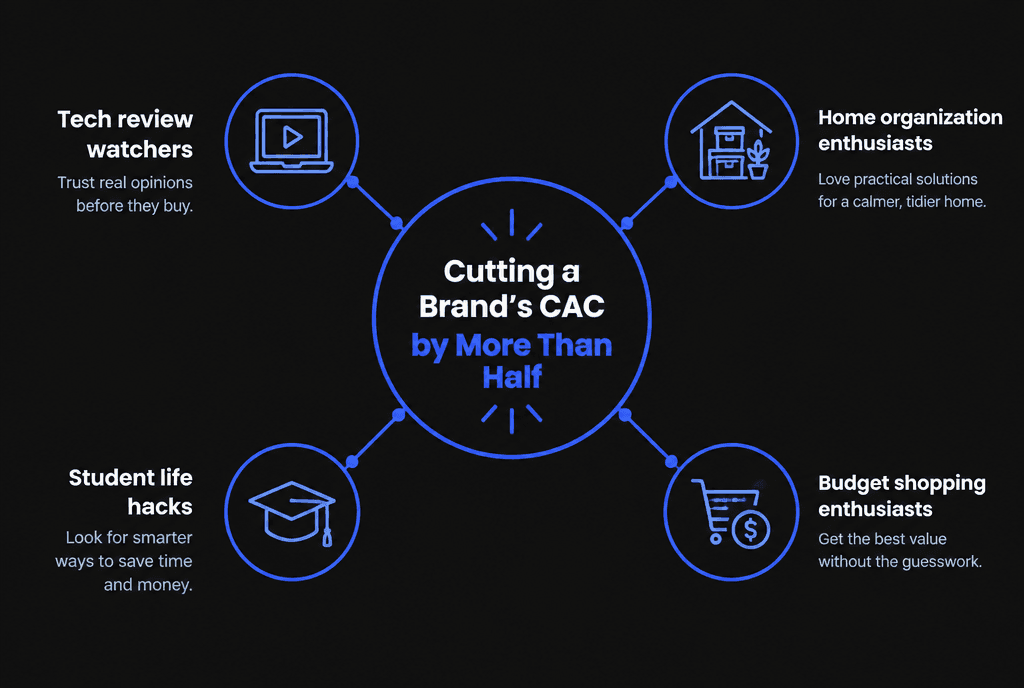
Example clusters for a product like a portable phone stand:
Tech review watchers: gadget unboxings and accessory reviews
Home organization: desk setups and cleaning routines
Student life hacks: dorm and study-space content
Budget shoppers: deals and "under $20" finds

How do you build a cluster-based TikTok targeting strategy?
List the content themes your buyers watch, create one ad group per theme using interest and behavior targeting, make two or three native videos for each theme, and keep budget and bid settings identical so results are comparable.
Research themes: browse TikTok's search and hashtags for content your customers engage with.
Build ad groups: one cluster per ad group, using interest categories plus video, creator and hashtag interactions.
Match creative: film ads that look like that cluster's organic videos. Spark Ads let you promote your own or a creator's posts with their likes and comments intact.
Set tracking: install the TikTok Pixel and optimize for purchases or leads, not clicks.
Run a fair test: same budget, schedule and optimization goal for every cluster for five to seven days.

How do content clusters lower acquisition costs?
Clusters lower costs by concentrating budget on the content themes that convert and by giving each audience creative it recognizes. Ads that feel native get watched longer, which tends to improve delivery and cost per result.
In our accounts, the gap between the best and worst cluster is often large. When one theme converts at half the cost of the others, moving most of the budget there lowers blended acquisition cost without touching the product or the offer. The infographic below shows a typical cluster map for a consumer product.
How do you scale a winning TikTok cluster?
Scale a winning cluster by raising its budget gradually, duplicating it with fresh creative, and testing adjacent themes that share the same audience. Add custom and look-alike audiences once the pixel has enough purchase data.
Increase budgets in steps of about 20 to 30%, then let delivery settle.
Duplicate the ad group with new hooks before frequency rises.
Test neighboring clusters, for example "minimalist desk setups" next to "home organization."
Build look-alikes from purchasers and remarket to video viewers through custom audiences.
When the pixel has steady conversion data, test TikTok's automated Smart Performance Campaign against your best clusters.
What creative works best for each cluster?
The best creative copies the format of the cluster's organic videos: same pacing, same type of creator and the same hooks. Polished commercials usually underperform native-looking clips.
Open with a hook in the first two seconds that names the viewer's situation.
Show the product in use, not on a white background.
Use on-screen text and captions.
Use trending sounds where they fit the brand.
Rotate new videos every one to two weeks per cluster.
Our TikTok Ads Manager tutorial walks through campaign setup step by step, and our guide to TikTok ads for small business covers offers and retargeting.
Who can you reach with TikTok ads?
TikTok reaches a large and growing share of U.S. adults, with the heaviest use among younger adults. If your buyers are under 40, it is likely one of the cheapest places to reach them with video.
Pew Research Center's social media fact sheet found in its 2025 survey that 63% of U.S. adults ages 18 to 29 use TikTok, compared with 44% of those 30 to 49 and 30% of those 50 to 64. Compare your cost per result on TikTok with Meta Ads and YouTube before shifting budget. Our paid social team can run the comparison for you.