Learning how to create YouTube ads that convert comes down to three things: earning the next five seconds, proving your claim fast, and asking for one specific action. This guide covers the script structure, creative checklist, production on a budget, formats and testing process we use at Savoir Management.
What makes a YouTube ad convert?
A converting YouTube ad matches the viewer's problem, shows the product working, builds trust with proof and ends with a single clear call to action that leads to a matching landing page. Views without that sequence rarely become sales.
Google's research-backed ABCDs framework summarizes it:
Attention: hook viewers immediately.
Branding: show your brand early and often.
Connection: make people think or feel something.
Direction: ask them to take action.
How do you understand what a YouTube viewer wants?
Viewers came to watch something else, so your ad must earn attention by being relevant to a problem they already have. Write the hook in their words, using the phrases your customers use in reviews, calls and search queries.
Before scripting, collect:
The top three problems customers mention before buying
The objections that delay purchases
The exact results customers describe afterward

How should you script a YouTube ad?
Use a five-part script: hook, problem, solution, proof and call to action. Keep each part short, and put the hook and brand before the five-second skip point.
Hook (0 to 5 seconds): "Still paying for leads that never call back?"
Problem (5 to 15 seconds): describe the pain clearly.
Solution (15 to 35 seconds): show the product or service working.
Proof (35 to 50 seconds): a testimonial, a number or a demonstration.
Call to action (final seconds): one action, repeated on screen.
How can you make YouTube ads without a big budget?
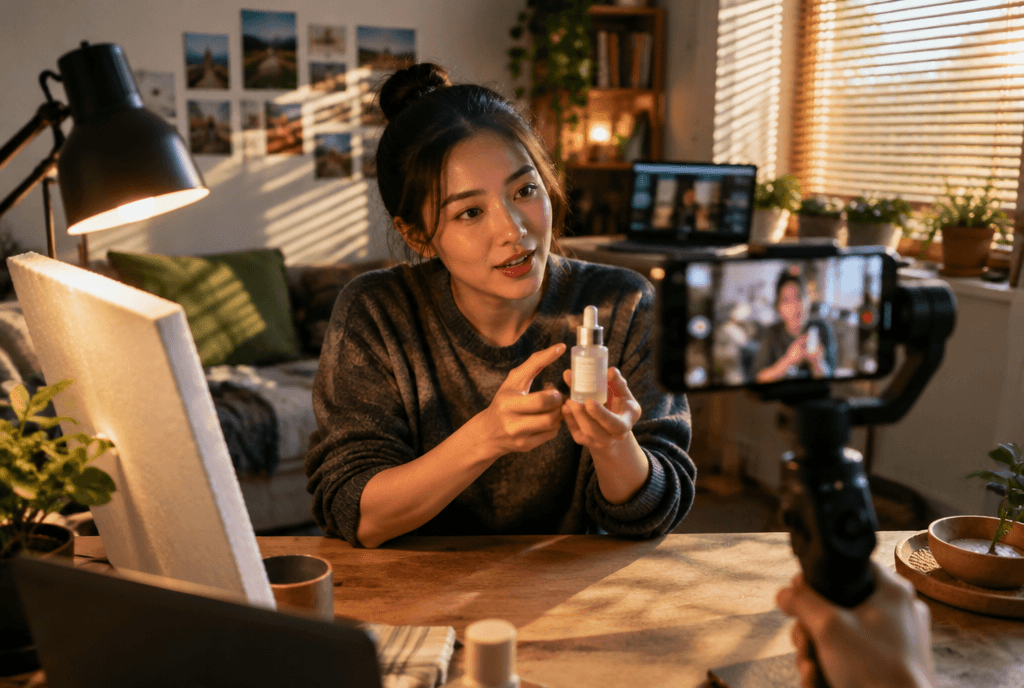
Shoot on a modern phone with good light and clear audio, add captions and on-screen text, and show real use instead of stock footage. Movement and real people hold attention better than expensive polish.
Film near a window or with one softbox light.
Use a lapel microphone; bad audio loses viewers faster than average video.
Add captions, because many people watch with sound low.
Show the product in hands, on screen or in use within the first 10 seconds.
Which YouTube ad format should you choose?
Use skippable in-stream ads for conversions, in-feed ads for consideration, Shorts ads for vertical mobile viewers and bumper ads for reach. Match the format to the goal of the campaign, not the other way round.
Google lists every option in its video ad formats guide. For performance goals, run your ads in a Video campaign with a conversion goal or a Demand Gen campaign.
What call to action works best on YouTube?
The best call to action is specific, low-friction and repeated: say it, show it on screen and match it on the landing page. "Book a free 15-minute audit" converts better than "Learn more."
Use one action per ad.
Add a sitelink or lead form asset where available.
Make the landing page headline repeat the ad's promise.
Our guide to high-converting landing pages covers the page side.
How do you measure and test YouTube ads?
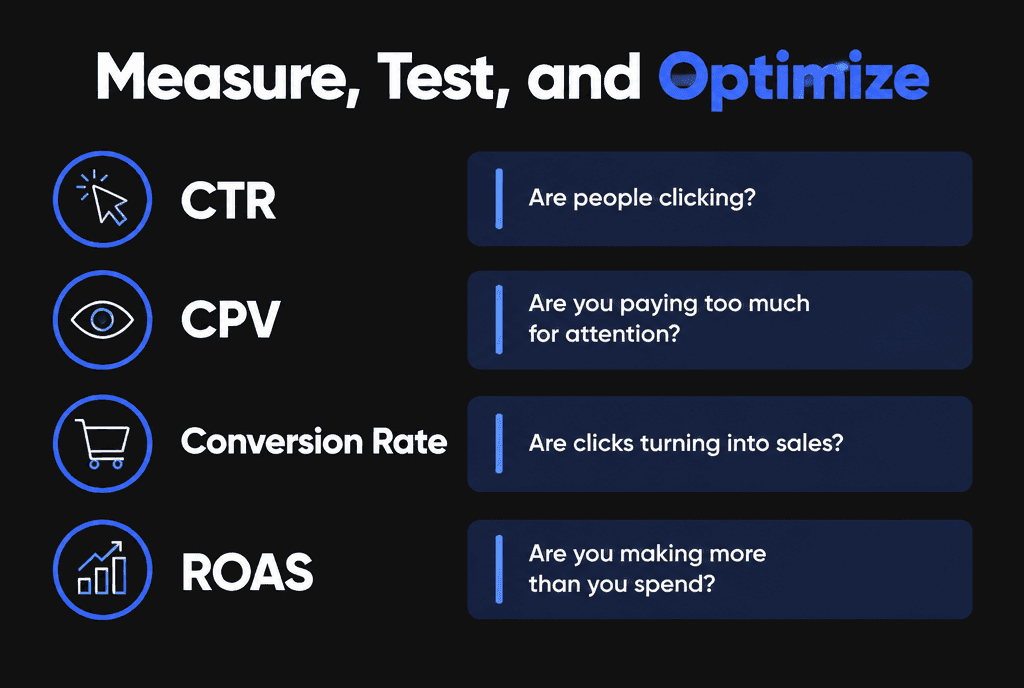
Track conversions in Google Ads and Google Analytics, then compare click-through rate, cost per view, conversion rate and return on ad spend across variants. Change one element per test so you know what moved the result.
Set up conversion tracking and recommended Analytics events such as generate_lead and purchase. Then review:
CTR: are people clicking?
Cost per view: are you paying too much for attention?
Conversion rate: are clicks becoming leads or sales?
ROAS: are you making more than you spend?
How do you turn viewers into buyers over time?
Retarget people who watched your ads with proof and offers, rotate new hooks every few weeks, and scale the variants with the lowest cost per conversion. Most buyers need more than one exposure.
Build a full sequence with our YouTube ads funnel strategy. If you are just starting, follow our YouTube ads for beginners blueprint. Running ads on several platforms? Compare creative learnings with TikTok and ask our digital marketing team to manage testing.